Staff view: draft layout for review. Sections marked Soon show what each one will hold.
The Field Guide · Wayfinder
Frequently Asked Questions
Straight answers to the questions we hear most often from homeowners planning a pool.
35 questions
Click any question to read its answer
No matching questions
Try another phrase or reset the category filters.
Earlier than most people expect. Designing the project, reviewing the property, making selections, permitting, and construction all take time. Cobb permits may only take a week or less while Atlanta, Sandy Springs, and others may take up to 6 months to achieve permit approval. If you hope to be swimming by a particular season or event, we recommend beginning the planning process several months in advance so we have more flexibility to develop the right project with you.
Find inspiration for your project
Not sure where to begin? Browse our Idea Book and save a few ideas that catch your eye.
You do not need to have everything figured out before talking with us. It helps to have a general idea of what you want from the space, a few inspiration photos, a rough sense of your investment range, and, if available, a recent property survey. Bring us what you have, and we’ll help you work through the rest.
Find inspiration for your project
Browse our Idea Book and save a few projects or features you like.
A survey is one of the most useful tools we can have as we begin planning your pool. It gives us a reliable starting point for understanding property lines, easements, existing structures, and other conditions that can affect the design. You do not necessarily need one for our first conversation, but having it early helps us make better decisions sooner. Even an older survey is worth sharing. We can let you know if an updated survey will be needed as the project develops.
Several factors determine what portion of a yard is actually usable. These may include setbacks, easements, utilities, septic systems, grading, drainage, trees, construction access, lot-coverage requirements, and local zoning rules. When we evaluate your property, we look at these conditions together rather than judging the yard by size alone. A survey is usually one of the best places to begin.
Have a survey or site photos?
Upload your survey so we can use it as your project develops.
A setback is a required minimum distance between certain improvements, such as a pool, and a property line, building, road, or other feature. Requirements vary by jurisdiction and sometimes by zoning district. When we begin laying out your project, we review the applicable setbacks because they can significantly affect the space available for the pool, patio, retaining walls, and other improvements.
Have a survey or site photos?
If you have a survey, upload it so setback information is ready for our review.
An easement is an area of private property where another party may have certain legal rights, commonly for utilities, drainage, or access. Setbacks and easements are limitations placed by the governing municipality for your specific property. They typically can't be encroached upon by the construction of a pool or other new structure without special permission (variance). An easement does not automatically mean you cannot have a pool; we’ll review how it affects the usable area and help shape the layout around it.
Have a survey or site photos?
If your survey shows an easement, upload it to your Wayfinder project.
The right size depends less on having the biggest pool possible and more on how you plan to use it. We look at how many people will normally use the pool, whether you want space for swimming or games, how much patio you need, and how the pool should relate to the house and backyard. Our goal is to make the entire outdoor space feel well proportioned, not simply maximize the amount of water.
Find inspiration for your project
Browse our Idea Book and save pools whose size and proportions feel right to you.
The depth of your pool should be chosen based on how you wish to use the pool. The most common play and lounging pool starts with a depth of 3.5' and has a deep end of around 6'. Deeper pools allow for safer jumping and diving activities, but often have less shallow area for standing. This is because the pool floor requires a maximum slope of 1' in drop for every 3' in distance.
There is no single correct amount. We think about where people will walk, lounge, dine, place furniture, enter the pool, and gather around features such as a spa or outdoor kitchen. One of the most common planning mistakes is concentrating so much on the pool itself that the usable space around it becomes an afterthought. We design the pool and the surrounding living space together.
See finished Hearthstone projects
Browse our finished projects and notice how the patios are furnished and used.
Often, yes. Sloped properties can create opportunities for dramatic designs, elevated patios, vanishing edges, and multi-level outdoor spaces. When we evaluate a sloped site, we also consider retaining walls, drainage, structural requirements, construction access, and how those items may affect the overall investment.
Find inspiration for your project
Browse our Idea Book for projects that use elevation changes as part of the design.
Trees can influence a project in several ways. We consider trunk and root locations, tree-protection requirements, shade, falling debris, future growth, and how the existing landscape can become part of the finished design. Large or protected trees may influence where a pool or retaining wall can be placed, while other trees may be valuable features we design around.
Find inspiration for your project
Save examples from our Idea Book where mature landscaping is part of the design.
A spa can add year-round use, a place to relax, and a strong focal point to the design. It also adds cost, equipment, controls, and decisions about size, seating, elevation, and how it connects to the pool. We’ll help you think beyond simply whether a spa looks appealing and consider how often your family is likely to use it.
Fiberglass pools arrive as factory-made shells with predetermined shapes and sizes. Concrete pools are formed on site, allowing greater flexibility in geometry, depths, integrated spas, shelves, edges and finishes. Fiberglass can be a good fit for a simpler installation, while custom concrete is often preferred when the design must respond to a unique property or architectural vision. Concrete generally involves more site work and finish maintenance.
There is no meaningful single price for an inground pool because the pool is only one part of the project. Size, site conditions, access, decking, materials, spa, retaining walls, landscaping, fencing, water features, and outdoor-living components can all affect the investment. Early in the process, we prefer to help you understand a realistic range rather than give you an artificially precise number before enough is known.
See how your choices change the range
Explore different project combinations in our Budget Builder.
Site conditions and project scope are often just as important as the size of the pool itself. Retaining walls, difficult access, large amounts of decking, premium materials, spas, water features, outdoor kitchens, landscaping, and structural requirements can substantially change the investment. When we evaluate a project, we look at the complete outdoor environment rather than pricing the pool shell in isolation.
Homeowners often focus on the pool shell and equipment while overlooking the rest of the backyard. We encourage you to think about patios, retaining walls, drainage, fencing, landscaping, lighting, electrical work, gas service, outdoor kitchens, fire features, furniture, permits, and upgrades to existing areas. Planning the complete space early helps us reduce surprises later.
See how your choices change the range
Review your project as a whole in our Budget Builder.
What you see in a photograph tells only part of the story. One property may be flat with easy access, while another requires retaining walls, engineering, difficult excavation, drainage improvements, or specialized equipment. Materials and structural details hidden beneath the finished surface can also be very different. There can also be meaningful differences in engineering, hydraulic design, equipment sizing, construction standards, workmanship, and the experience of the team managing the project. Those details may be almost invisible in the finished photograph, but they can have a major effect on how easy the pool is to operate, service, and enjoy for many years. When we price a project, we account for both the visible design and the less-visible work that supports it.
See how your choices change the range
Use our Budget Builder to explore how site and feature choices can change the project range.
Each design step will come with a narrowing budget range as the features and scope become more defined. The final price will appear on your proposal along with a clear set of specifications to define the scope to be included. Your proposal may also include line items for alternates and upgrades available to you. During construction, the scope may be modified with a change order to be approved by you prior to additional work being performed.
Construction time varies depending on the project, permitting, weather, inspections, site conditions, material availability, and the amount of outdoor work surrounding the pool. We think of the build as a sequence of stages rather than one continuous event. Some days involve obvious activity; others may involve inspections, curing time, scheduling, or preparation for the next trade. An average pool can take 8 to 10 weeks to build properly once permits and initial inspections are complete. Extremely complicated projects may take 6 months up to a year to complete. Permitting times also vary greatly by municipality.
We break our projects into construction phases. "Pre-Construction" includes admin activities and permitting. "Excavation" includes the pool layout and dig. "Structure" includes the plumbing, rebar, and concrete shell installation. "Mechanical" includes the equipment and connection of utilities. "Finishes" includes tile and stone and wall installation. "Completion" includes the pebble install, water fill, and startup. "Follow-up" includes final inspections, cleanup and maintenance visits. Additional work such as retaining walls, landscaping, fencing, kitchens, or fire features may be coordinated around those stages.
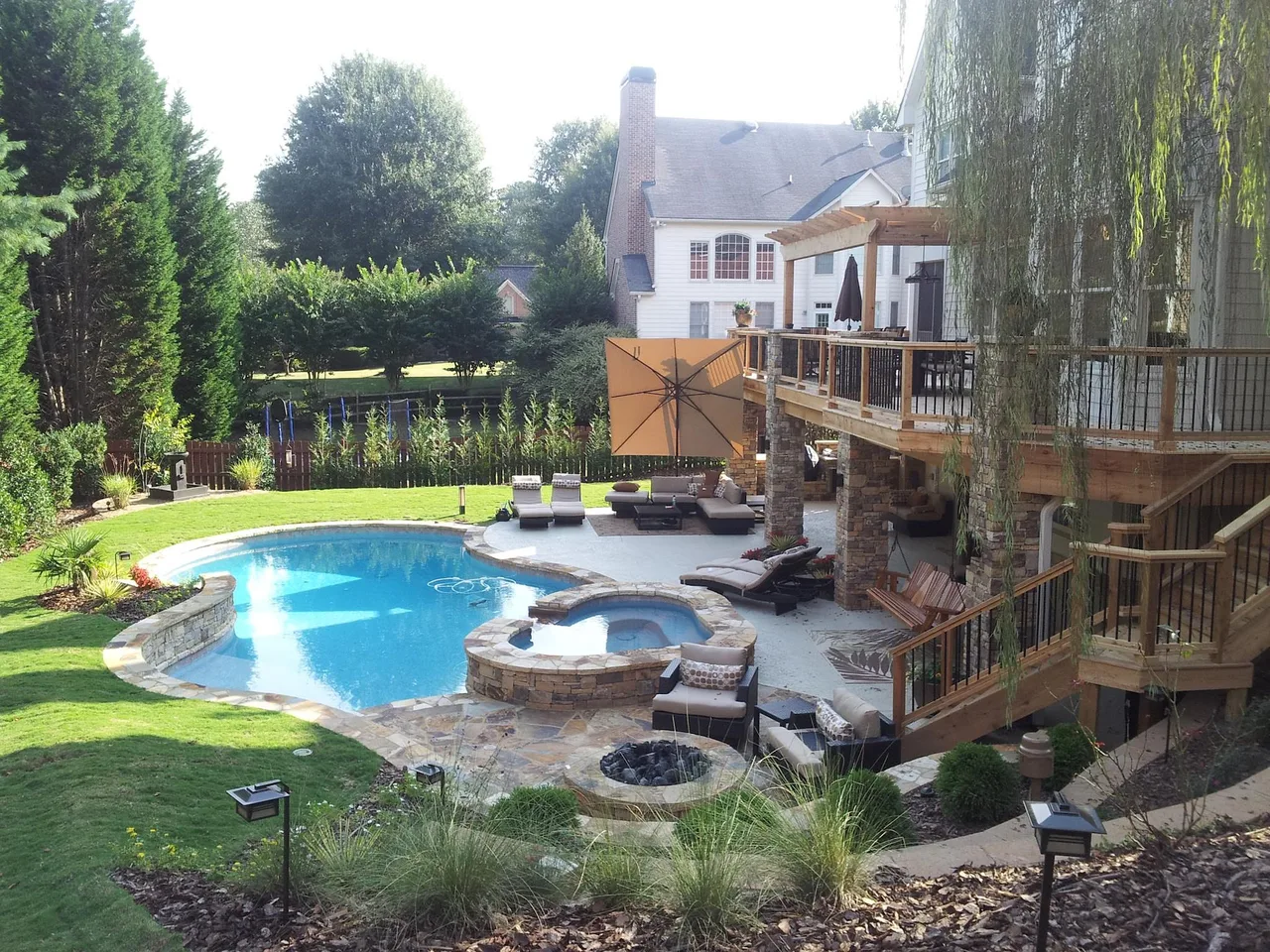
Hearthstone portfolio photo
Building a pool is substantial construction. You should expect excavation equipment, deliveries, dirt, noise, workers, and temporary disruption to portions of the property. We plan construction access carefully and consider which areas may need protection, temporary use, or restoration when the work is complete.
Hearthstone portfolio photo
Weather is a normal part of outdoor construction. Heavy rain can affect excavation, soil conditions, concrete work, decking, access, and other scheduled activities. When weather changes the plan, our goal is to keep you informed about what has been affected, what work can continue, and what the next expected milestone will be.
Absolutely, but changes can become more difficult and expensive as construction progresses. A feature that is simple to adjust during design may require demolition, new materials, engineering, or schedule changes once it has been built. That is why we spend time helping you think through the design and selections before construction begins.
Both systems ultimately use chlorine to sanitize the water. A traditional system typically requires chlorine to be added directly, while a salt-chlorine generator creates chlorine from dissolved salt in the pool water. Salt systems can make routine sanitation more convenient, but they do not eliminate testing, water balancing, or regular pool care. We can help you decide which approach best fits how you want to own and maintain the pool.
Learn the words you will hear
See “Saltwater Chlorine Generator” in our Pool Terms.
A pool needs regular cleaning, filtration, water testing, chemical balancing, equipment checks, and seasonal attention. Modern automation and equipment can make ownership easier, but no residential pool is completely maintenance-free. We’ll explain the care your specific pool and equipment will require so you can decide whether you want to handle routine maintenance yourself or use a service company.
Learn the words you will hear
Learn the basic equipment and maintenance terms in our Pool Terms.
For many homeowners, routine ownership is fairly simple once the pool is established. The normal rhythm is keeping an eye on water level and clarity, emptying baskets as needed, checking that equipment is operating normally, and keeping the water chemistry in range. We’ll show you how your system works so the pool feels familiar rather than mysterious.
Learn the words you will hear
Learn the basic maintenance terms in our Pool Terms.
Our pools are designed with easy maintenance in mind, though some owners prefer professional service for convenience and consistency. We recommend understanding the basics either way, because knowing what normal operation looks like helps you recognize when something needs attention.
A newly finished pool usually requires extra attention while the water chemistry is stabilized and the interior finish goes through its initial startup period. We’ll provide the specific startup guidance appropriate for your finish and equipment, including brushing, filtration, chemical balance, heater use, and when certain features can be operated.
Usually, yes, but it is smart to plan ahead, and make sure gates latch and door alarms or the cover work before you leave. Before a longer trip, we recommend making sure the pool has adequate water, normal circulation and sanitation, and a plan for unusually hot weather, storms, or heavy debris. Depending on the season and length of the trip, arranging for someone to check the pool can prevent a small issue from becoming a larger one.
Hot weather usually means more swimming, faster chlorine demand, more evaporation, and often more frequent attention to water balance and water level. Heavy use, sunscreen, storms, and organic debris can also affect water quality. We recommend adjusting equipment and sanitation settings seasonally rather than assuming the pool should operate exactly the same way all year.
Falling leaves and cooler temperatures change the maintenance routine. Skimmer baskets may need more frequent attention, debris should be removed before it sits on the pool surface or floor, and equipment schedules can often be adjusted as water temperatures and swimming frequency decrease. We also like to use this time of year to identify any equipment issues before winter.
That depends on climate, equipment, how you use the pool, and how the system was designed. Here in Georgia we recommend that pools remain open and circulating through winter even when they are not being used for swimming. In colder climates, winterization may be necessary to protect plumbing and equipment from freezing. We’ll explain what makes sense for the pool we build for you.
Hearthstone portfolio photo
In our pool-and-spa systems, the spa can be heated and used independently from the pool, which is one reason a spa can add useful year-round enjoyment. When we design the system, the plumbing, valves, controls, and heating equipment determine how quickly the spa heats and how easily it can be operated separately.
Pool equipment is mechanical and will not last forever. Pumps, heaters, salt cells, automation components, lights, valves, and other parts have different service lives and maintenance needs. We select and install equipment with long-term serviceability in mind, and proper water chemistry and routine maintenance can help extend equipment life. It is still reasonable to expect occasional repairs over the years, just as you would with HVAC or other home systems.
Learn the words you will hear
Learn what each major equipment component does in our Pool Terms.
Cloudy or green water usually means filtration, sanitation, circulation, or water balance needs attention. The cause can range from a simple chemistry issue to equipment that is not operating correctly. We recommend addressing the cause promptly rather than continuing to add chemicals without understanding what is happening.